
Advanced Driver Assistance Systems: In Search of those Decisive Fractions of a Second
Author: Alexander Föll
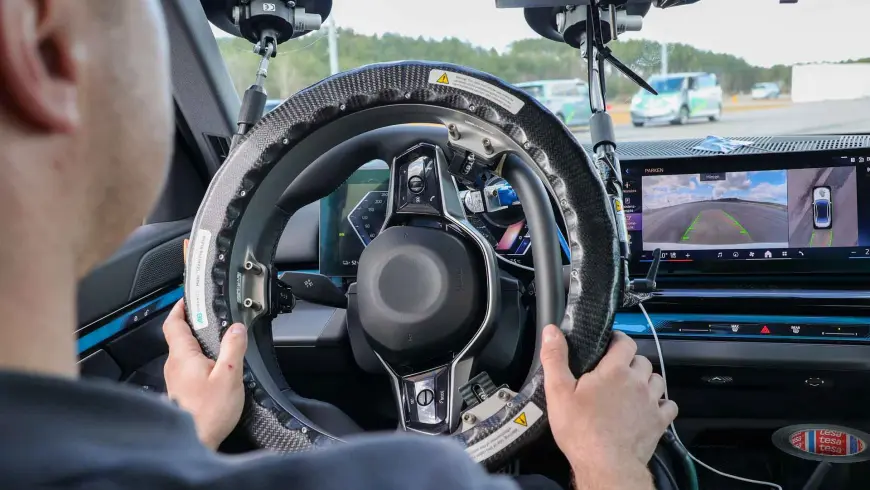
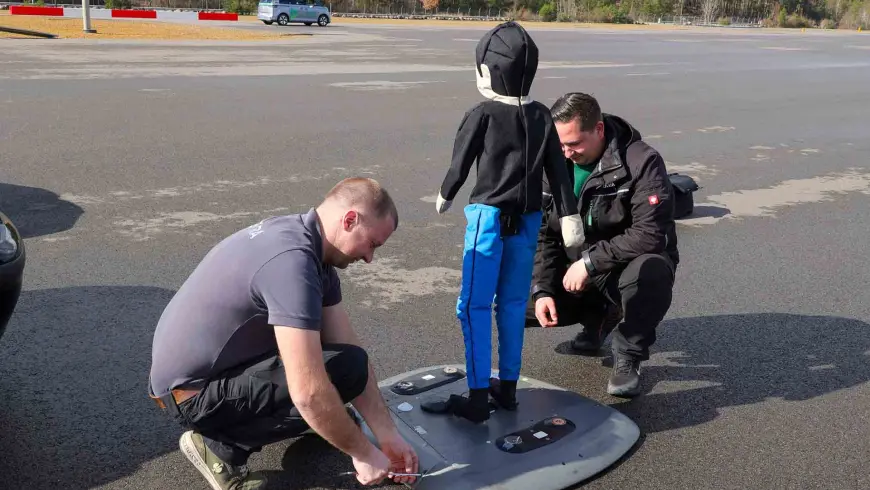
Jun 17, 2026Mobility StoriesModern driver assistance systems in vehicles are increasingly helping drivers navigate critical traffic situations. But what happens if these sophisticated systems don’t function optimally? On behalf of the Service Division Vehicles, colleagues from the ADAS research group at the DEKRA Technology Center in Klettwitz investigated the potential effects of minimal misalignments in a car’s camera and radar sensors. As if by magic, the child dummy moves across the road in front of two parked cars, toward which a white test car is approaching at a speed of 30 km/h. The accident seems inevitable. His legs even suggest he is taking steps, but the little boy only becomes visible to the driver at the very last second. There is no time left for a human reaction.
Automated Driving and how the Emergency Braking Assistant Steps in where Humans Can no Longer
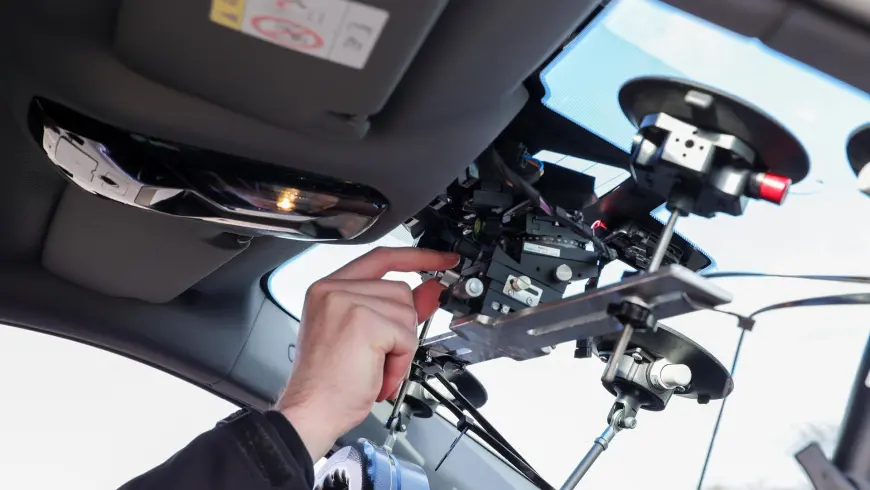
A shift in the viewing angle of between 3 and 5 degrees can occur if, for example, the windshield is replaced and the camera is not recalibrated. Such a deviation is still within the system’s tolerance range. No error message will be displayed, and the driver assumes that everything is fine. Even small, unnoticed parking bumps could minimally misalign the radar sensors built into the car’s front or rear bumper, according to the 27-year-old.
Improvement in Obstacle Detection: The Use of Driving Robots Guarantees Precise Results
Conclusion: Regular Inspection as Part of the Annual Car Inspection is Advisable
We were able to show that the correct adjustment and calibration of the environmental sensors is necessary for the reliable functioning of ADAS. Even minor sensor misalignments within the tolerance range limit functionality and can reduce road safety potential. Regular inspection of the ADAS, including the sensors—for example, as part of the vehicle inspection—therefore seems advisable to ensure the effectiveness of driver assistance systems throughout the vehicle’s lifespan.